
Rights4Vapers calls on Health Minister Marjorie Michel to show Canadians the results of the
2024 Ministerial Order

TORONTO, September 23, 2026 — Following comments by federal Health Minister Marjorie
Michel that she is not considering changes to Canada’s restrictions on nicotine pouches,
Rights4Vapers (R4V) says there is a more fundamental question that needs answering:
What evidence does the federal government have that its current approach is achieving its
intended results?
The restrictions Minister Michel is defending were introduced in August 2024 by then-Health
Minister Mark Holland. The Ministerial Order was intended to reduce the appeal of, access to
and recreational use of nicotine replacement therapies by young people, while maintaining
access for adults using them to quit smoking.
Two years later, R4V says Canadians deserve to know whether those objectives are being met.
“Minister Michel did not make the decision to restrict nicotine pouches to pharmacies. She
inherited it,” said Maria Papaioannoy, spokesperson for R4V. “A new minister has every
opportunity to examine the evidence, look at what has happened over the past two years and
ask whether the policy is producing the results it was supposed to produce.”
Michel acknowledged to The Canadian Press that Canada has an illicit nicotine pouch problem
and that controlling online sales is a particular challenge.
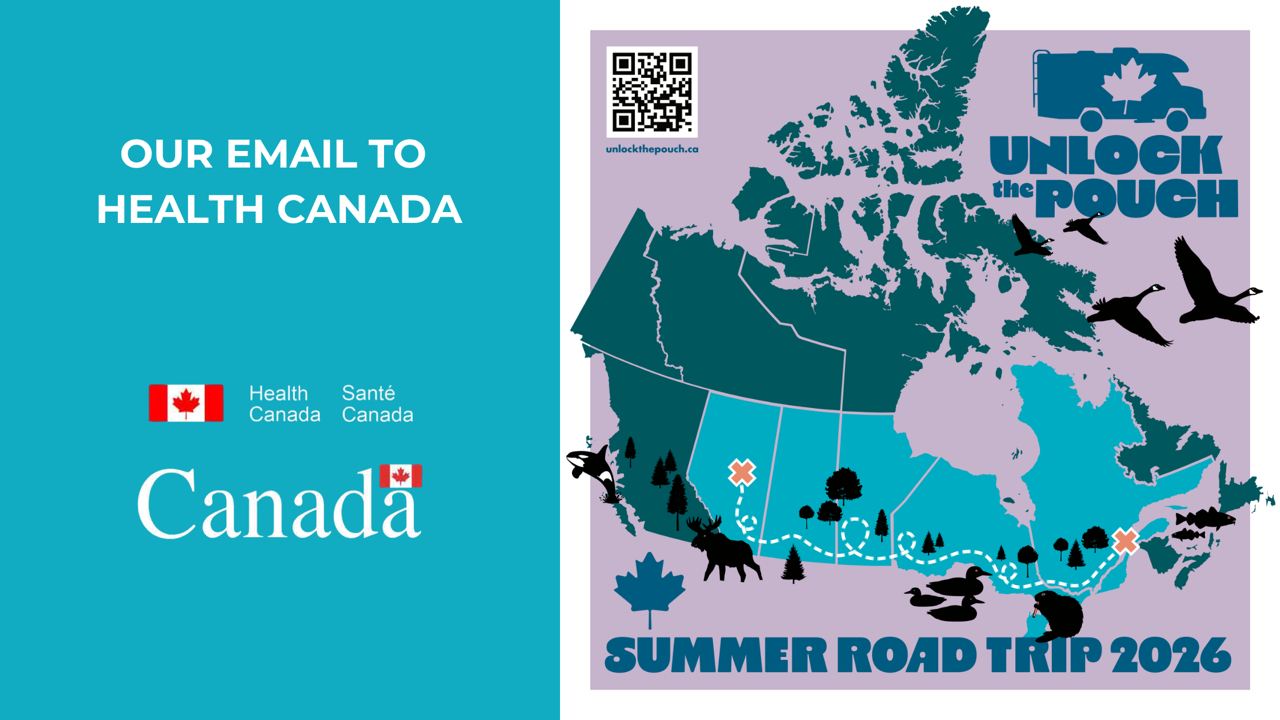
R4V saw evidence of that illicit market firsthand this summer during its cross-Canada Unlock
the Pouch Road Trip.
In Ontario alone, the organization visited 15 stores. Twelve were selling unauthorized nicotine
products. R4V purchased 42 unauthorized products, including nicotine pouches ranging from 6mg
to 50 mg. Products were available in flavours including Gummy Bears, Skittles, Peach Bellini
and Cotton Candy, with some carrying foreign-language labelling and warnings.
Meanwhile, authorized nicotine pouches are restricted to sale behind pharmacy counters and
limited to mint and menthol flavours.
“The question isn’t whether youth should be protected. Of course they should,” said
Papaioannoy. “The question is whether the policy designed to protect them is doing so. If
unauthorized products are readily available in stores and online, including products with high
nicotine strengths and candy-style flavours, government should be able to demonstrate what
its policy has accomplished.”
Health Canada itself continues to warn Canadians that unauthorized nicotine pouches are being
sold in convenience stores, gas stations, other retail locations and online.
R4V says the federal government should make public the evidence it is using to evaluate the
Ministerial Order two years after its introduction. R4V sent a letter to Health Canada and asked
the following questions about the evidence:
1. How has Health Canada measured the size and growth of Canada’s illicit nicotine-pouch market since August 2024?
2. How many inspections, seizures and enforcement actions involving unauthorized nicotine pouches occurred before August 2024, and how many have occurred since?
3. Has Health Canada measured whether the pharmacy-only restriction has actually reduced youth nicotine-pouch use?
4. Has Health Canada assessed the impact of these restrictions on adult smokers and former smokers seeking access to lower-risk alternatives to cigarettes?
5. Has Health Canada studied whether restricting the legal market has affected consumer demand for unauthorized products?
6. What would it take for Health Canada to reconsider the August 2024 Ministerial Order?
7. When will the Ministerial Order be formally reviewed?
“The Minister doesn’t have to defend a decision simply because a previous minister made it,”
said Papaioannoy. “She can ask for the evidence. Canadians should be able to see that evidence too.”
R4V says the debate over nicotine pouches should not be reduced to a choice between
protecting young people and providing adults who smoke with access to authorized
alternatives.
“We can protect young people, enforce the law against illegal sellers and have an evidence-
based discussion about adult access at the same time,” said Papaioannoy. “But after two years,
simply saying the government isn’t considering change doesn’t answer the most important
question: Is the current policy working?”
About Rights4Vapers (R4V)
R4V is a Canadian consumer organization representing adults who use safer nicotine products
and advocates for evidence-based approaches to nicotine and tobacco harm reduction.
Media Contact
Maria Papaioannoy
647-407-7206